
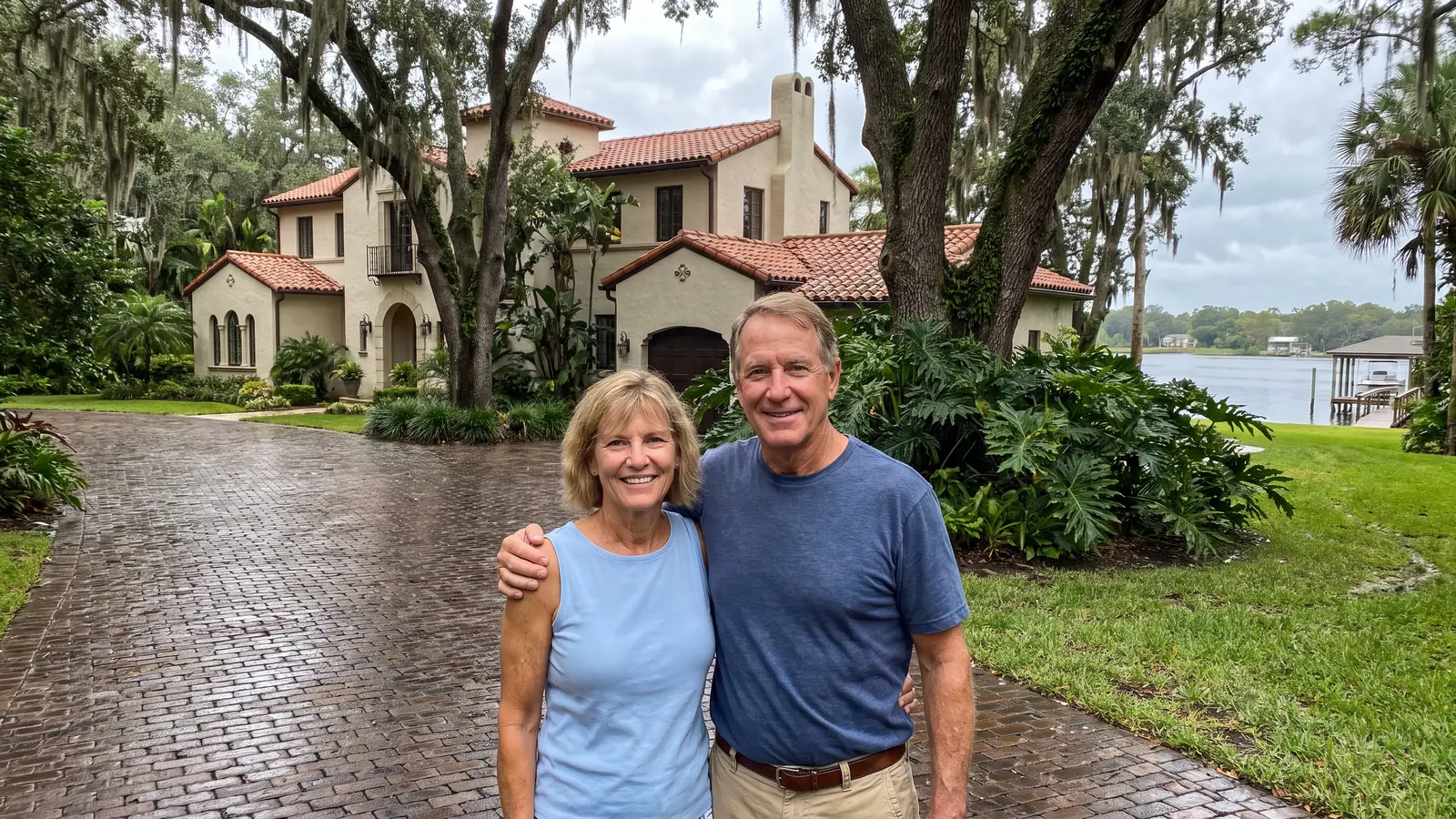
Paver sealing for Fort Caroline homes
Paver Sealing in Fort Caroline, FL
River air and old oaks keep Fort Caroline pavers damp, so call (904) 567-0456 for a free washing and sealing estimate.
- Brings out deeper paver color
- Fresh joint sand helps lock pavers in place
- Gives weeds less room to grow
- Makes the surface easier to keep clean
- Free estimate, no obligation
Request a Free Estimate
Free, no obligation.
Fast, careful paver sealing in Fort Caroline
Paver sealing is available across Fort Caroline, from the older ranch streets of Fort Caroline Club Estates to the communities closer to the river. Driveways, patios and pool decks get washed, refilled with sand and sealed by a local contractor, and the first visit is a free estimate. As soon as you request your free estimate, the clock starts on a reply within 1 business day, usually much sooner.
Think of the patio behind the house, where the pavers wear a green skin and the joints have thinned. Mildew keeps coming back after every rain. A wash, fresh sand and a coat of sealer give you a clean, even surface again. If you want to talk it over, call (904) 567-0456 and describe the patio.
Why hire a local paver sealing contractor in Fort Caroline?
Fort Caroline pavers sit between the Intracoastal Waterway and the St. Johns River, where damp air and shade are part of the job. A local contractor plans for that, and to see how, request your free estimate.
A free walk around
A contractor looks over your Fort Caroline driveway, patio and pool deck at no charge and writes up a clear price. You can ask questions as you go.
A range to hold bids against
In Northeast Florida, the commonly published price to clean, re-sand and seal is $1.75 to $3.25 per square foot. Compare any Fort Caroline bid to that range.
A finish that fits the house
Matte keeps the natural look beside brick and block. Wet look deepens color but shows scuffs sooner. You choose.
No pressure to book
You set the date and decide on the work. A Fort Caroline estimate carries no obligation, so take your time and compare.
Get Your Free Estimate in Fort Caroline
Tell us about your pavers in Fort Caroline.
Free, no obligation
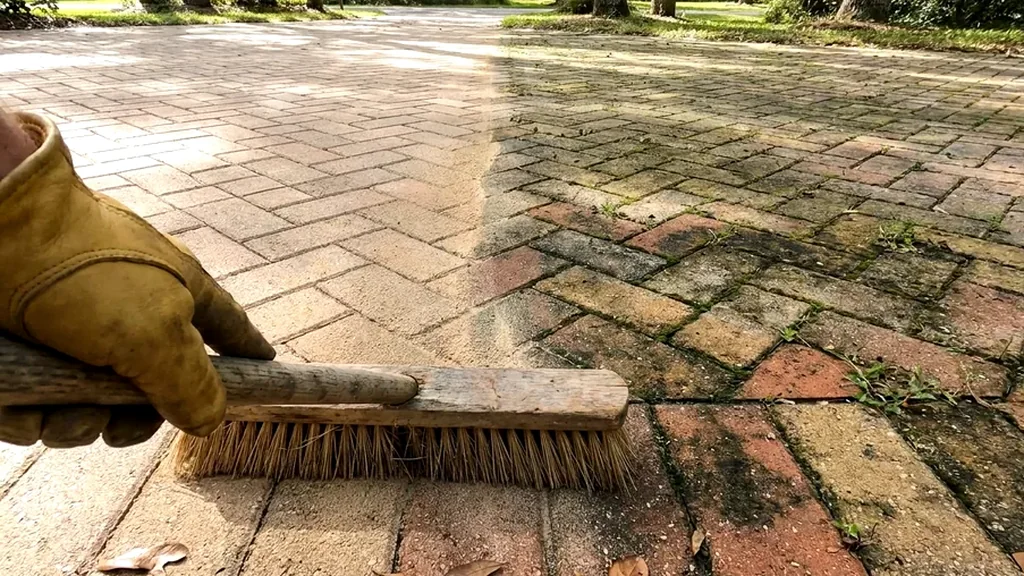
What paver problems show up most in Fort Caroline?
Moisture from two sides
A paver repair company in Jacksonville looked at ZIPs 32224 and 32225, which lie between the Intracoastal Waterway and the St. Johns River. It says they see more water, salt and humidity than most of the city. The river itself is an estuary, and tides and ocean storms have a strong influence on it. That damp air settles on pavers all year. Sealing helps because a sealed surface holds less dirt, and the algae have less to grip. A contractor who sees a shaded corner knows it stays wet longest, and plans extra drying time there. Cleaning and sealing together is what keeps the green from returning as fast. A shaded corner near the house stays wet longest and shows green first.
Green skin under shade and pollen
A Jacksonville washing company describes Fort Caroline Shores as an established area of brick and painted block ranches under mature trees. It says heavy pollen, humidity and shade keep mildew and algae coming back. Landscape Ontario says algae should not grow on pavers unless the area is heavily shaded. On a shaded patio, washing and drying come first, then sealing slows the return. Plan for a wash before the coat even on a patio that looks clean, since a film of pollen can hide under the surface. Pollen also settles into joints, which holds moisture against the pavers. Pollen settles into joints too, which holds moisture against the pavers.
Oak roots that push pavers up
The same repair company says older lots often have mature oaks close to the driveway, and the roots can push pavers into ridges. Sealing locks in whatever is there, so a ridge sealed today is a ridge you keep. The contractor marks lifted sections and resets them before any coat goes on. That way the finished surface lies flat. If a root is still growing under the pavers, the ridge can come back, and the contractor will say so rather than promise a fix that will not last. Ask the contractor to mark each ridge during the walk-through. Ask the contractor to mark each ridge during the walk-through.
Ranch drives that run long
Safe Touch describes the 32211 and 32225 area as ranch homes, long drives, fences and pool decks, and says two to three years between coats is typical there. A long drive means a lot of square feet in full sun. The tire lanes wear first. A coat that is only a few years old may already look thin there. A water test shows it: when drops soak in and darken the paver instead of beading, the coat has done its work. A long drive also gives you more pavers to protect, so the price grows with the length. A long drive also gives you more pavers to protect, so the price grows with the length.
Sand that slips on a slope
Fort Caroline has some of Jacksonville's few hills and bluffs, formed by relict dune fields on the south bank of the St. Johns River. Water runs downhill on a sloped drive and carries joint sand with it. A paver company says one afternoon thunderstorm can wash fresh sand out of the joints. So the sand step is timed for a dry stretch, and the sealer follows. Sealing over the filled joints then helps hold the sand on the slope. A level, clean surface also makes the sealer go on evenly. A level, clean surface also makes the sealer go on evenly.
Which Fort Caroline neighborhoods have the oldest pavers?
The oldest streets are the likeliest to have the oldest pavers, though pavers are often added after a house is built. Fort Caroline Club Estates dates back to 1960, with single-family homes built from 1959 to 2021 on lots up to an acre. Fort Caroline Shores was built from 1975 to 1978, mostly midsize homes of 1,475 to 2,018 square feet. Call (904) 567-0456 and name your street so the contractor can plan for its age.
Riverwoods has required Architectural Review Board approval for exterior and landscape changes since its association began in 1985. Resold homes there were built from 1985 to 1993. If your street works like that, get the finish approved before the work starts. To talk through finish choices, request your free estimate.
Ft Caroline Oaks homes with recorded sales have a median build year of 1991, and about 97 percent are single-family. Caroline Cove has 142 homes, and Hunters Run has 50 built from 1986 to 1998. The Valley wraps around Lake Narcissus and counts 478 parcels, with homes from 1974 to 2008. To ask about your community, call (904) 567-0456.
What does paver sealing cost in Fort Caroline?
For clean, re-sand and seal work, companies in Northeast Florida commonly publish $1.75 to $3.25 per square foot. A Fort Caroline job can land above or below that range, depending on the prep. A long ranch driveway adds square feet, and a patio under heavy shade adds cleaning time. For a written number with each piece listed, call (904) 567-0456.
Prep moves the price more than the sealer does. A Jacksonville company reports about 2 to 3 hours of prep work behind each hour of sealing. Smaller jobs cost more per square foot, and failed old coats have to be stripped first. To price your Fort Caroline pavers, request your free estimate.
| Paved area | Typical example | Clean, sand and seal |
|---|---|---|
| 300 sq ft | Small patio or walkway | $525 to $975 |
| 600 sq ft | Two car driveway | $1,050 to $1,950 |
| 1,000 sq ft | Large driveway or pool deck | $1,750 to $3,250 |
| 1,500 sq ft | Driveway plus pool deck | $2,625 to $4,875 |
Math based on the $1.75 to $3.25 per square foot that Northeast Florida paver companies publish. Your contractor sets the actual price after seeing the surface. Repairs, leveling and stripping failed sealer are usually extra.
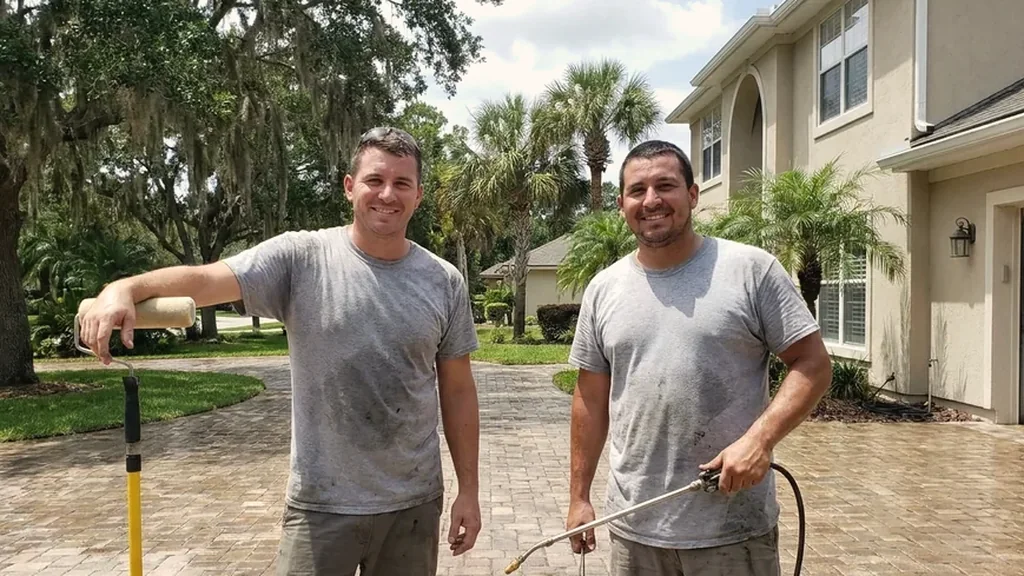
How does a paver sealing job work in Fort Caroline?
Walk and measure
The contractor measures the driveway, patio, walkway and pool deck, and looks at the shade, the slope and any oak roots near the edges. The written scope lists what needs washing, resetting and sealing, with a price for each square foot. Walk along and point out any trouble spots you know about. Shade, slope and roots are all noted in writing. The contractor may also look at downspouts, since they can send water across a slope.
Wash and treat
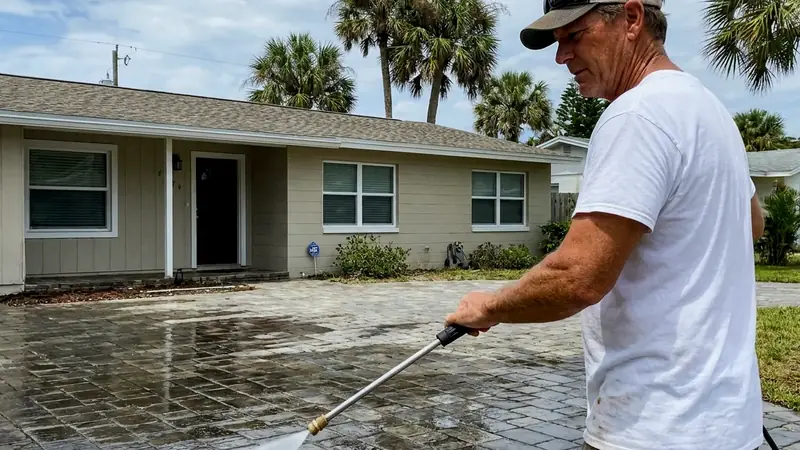
Algae, mildew, pollen film and dirt come off first, and rust or oil spots are treated. The pressure stays moderate, because a hard wash can loosen joint sand. Shaded pavers may need more time at this stage. Slope and shade can change how long this stage takes. Rust and oil are treated by spot, not rinsed away. Pavers close to the house can hold shade and damp, so they are checked closely.
Reset and refill
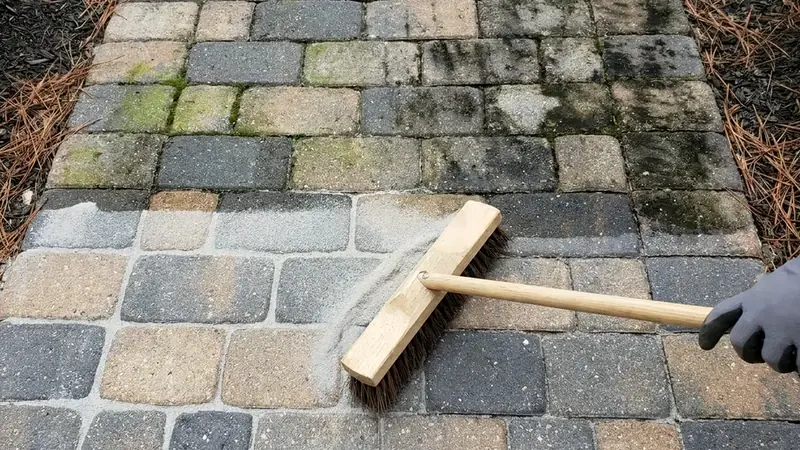
Roots, settling or turning tires can leave lifted or dipped pavers. These are reset before sealing, because a coat locks in whatever is there. Then the joints are refilled with silica sand and swept. Pavers shift most where tires turn and where roots run, so those sections get the closest look. Silica sand packs tightly and gives weeds little room. Tree roots near a patio edge are measured and noted.
Dry out
Sealer goes down only on a fully dry surface, typically 24 to 48 hours after cleaning. Near the river, a damp morning can add hours. A damp paver can turn the sealer white or blotchy. Wet weather moves the work to another day. The wait is part of doing it right. On a river lot, the morning damp can slow the drying.
Seal and set
The sealer is sprayed, back-rolled and left to set. Walking is fine in a few hours. Cars should stay off for about a day, and the contractor tells you exactly when to bring them back. A water test later tells you when the coat has done its work: beading means it is working. A sealed surface is easier to rinse the next time. A water test a few weeks later shows if the coat is doing its job.
Complete paver services in Fort Caroline
A job here starts with a wash that clears the green film and pollen, then a dry period so the joints can release moisture. Fresh silica sand is swept in next. The sealer comes last, sprayed and back-rolled for even coverage. To see how that fits your patio and drive, request your free estimate.
Fort Caroline lots often hold a long driveway, a front walk and a back patio, and each surface wears on its own schedule. A penetrating sealer leaves the look almost unchanged. A film sealer comes in matte, satin or wet look, and pool areas need traction. Describe each surface to the contractor when you call (904) 567-0456.
Old coats matter here: water-based sealer cannot go over solvent-based, so say what you know. Wet look deepens color, while matte keeps the natural look, and one company says sealer acts like sunscreen for pavers. That suits a sunny drive. To compare finishes for your house, request your free estimate.
Polymeric sand needs dry days to cure, so the contractor may wait for a clear stretch. A river lot can stay damp after a storm, and sealer needs a dry surface. Expect a full day without cars on the fresh coat. Call (904) 567-0456 to plan the days around the weather.
Questions to ask before you hire
- Will you walk the property with me first and point out sunken or cracked pavers?
- Will a sealed finish make my steps and pool surround slippery when wet?
- Will the estimate show the square feet you measured and the price for each square foot?
- Does clay brick need a different sealer than concrete pavers, and which one is mine?
- How will I know when the driveway is ready for another coat?
- How do you handle pavers that stay damp in the morning because of shade and the river air?
- Do you work around my sprinkler heads and landscape lights?
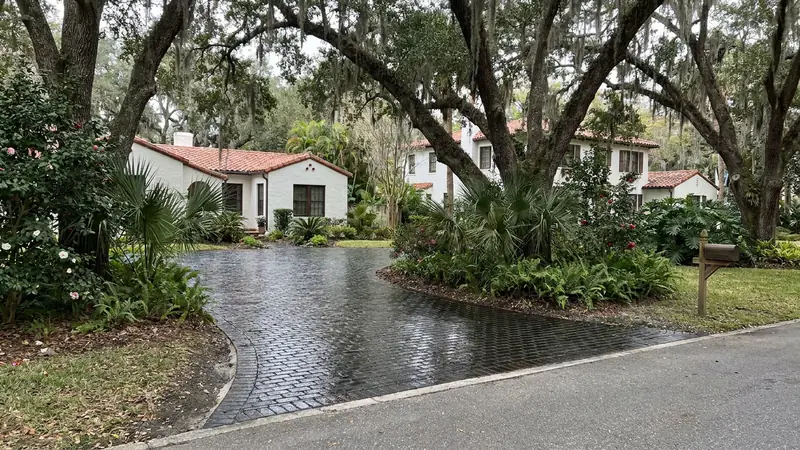
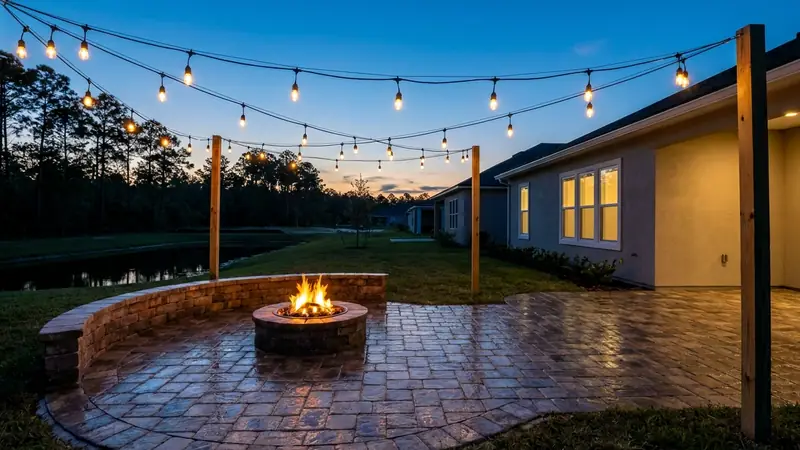
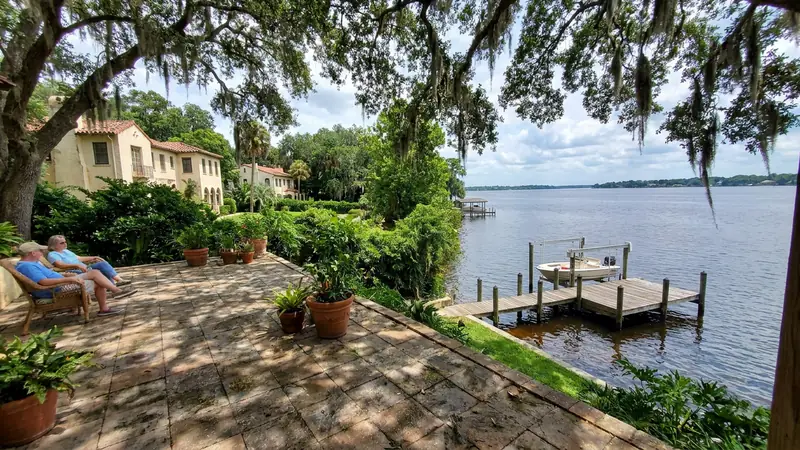
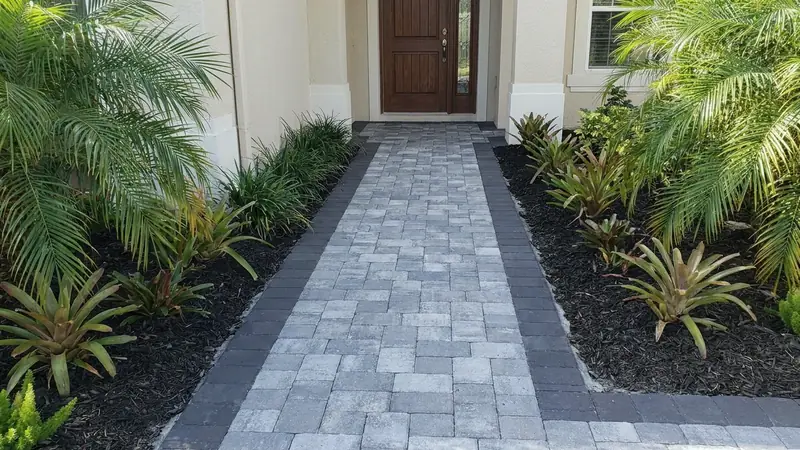
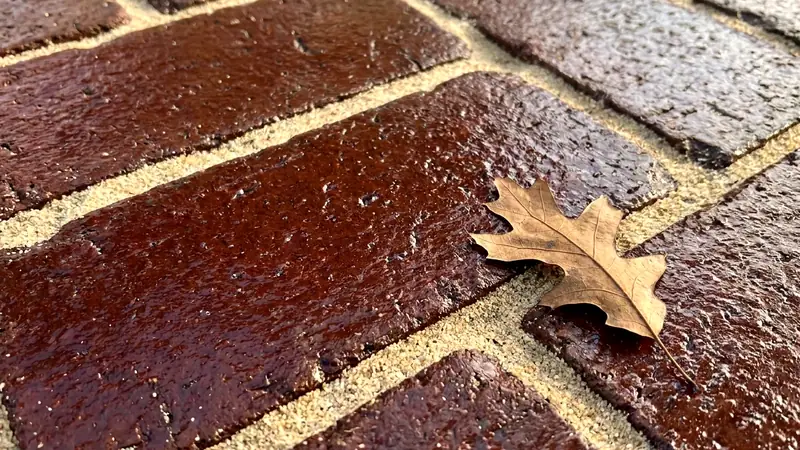
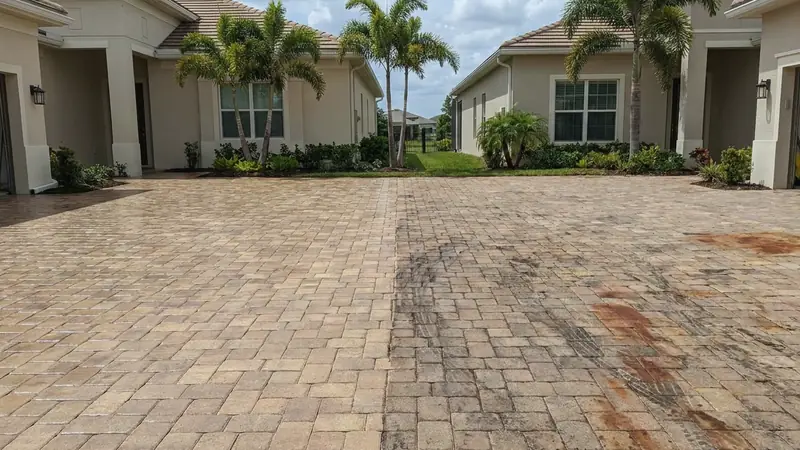
What do sealed pavers look like around Fort Caroline?
Why local matters in Fort Caroline
A contractor who works Fort Caroline knows the river's influence. The St. Johns at Jacksonville is an estuary with saltier water, and a nor'easter can raise the water several feet. That is a river-wide fact, and it explains the damp air near the banks. Call (904) 567-0456 to ask how a contractor plans for it.
Local also means knowing the review boards. Under Statute 720.3035, an association must apply its design standards equally to every owner and stay inside what its own documents say. Read your documents before you pick a finish. To compare a natural-look and a color-enhancing finish, request your free estimate.
A local contractor knows the trees too. Mature oaks close to a driveway can push pavers into ridges, and the contractor can read the signs before the work starts. A few minutes at the curb tells a lot, and a root that is still growing changes the plan. Call (904) 567-0456 to have your driveway looked over.
What makes Fort Caroline different from the rest of Jacksonville?
French settlers built Fort Caroline in June 1564 on a small plain at the foot of the high bank later named St. Johns Bluff. The National Park Service set up the memorial at 12713 Fort Caroline Road, and it hosts the visitor center for the Timucuan Preserve. The Mill Cove Complex, a Native American site about 1,000 years old, lies in residential yards in the area. To plan a visit, request your free estimate.
The Spanish Pond Trail leads off Fort Caroline Road, and the Willie Browne Trail starts off Mount Pleasant Road, which crosses Hammock Creek on a bridge. The preserve's Theodore Roosevelt Area covers 600 acres of hardwood forest, wetlands and scrub. Willie Browne gave his land to The Nature Conservancy in 1969. Call (904) 567-0456 to book a free look at your pavers.
Frequently Asked Questions
How much does it cost to seal pavers per square foot near Fort Caroline?
In Northeast Florida, the commonly published price to clean, re-sand and seal is $1.75 to $3.25 per square foot. A failed old coat must be stripped first, which adds cost. A free Fort Caroline estimate gives the exact figure for your pavers. Look for the square feet and the per-foot price on the page. That keeps the bids on equal terms. Longer ranch drives and patios mean more square feet to price.
Is it good to seal your pavers in Fort Caroline, Florida?
Yes. A Jacksonville paver company says sealer on concrete pavers lowers UV fade, joint washout and mildew. Mildew is a steady problem near the river, so a sealed surface holds up better against it. A free estimate spells out what your own surface needs. Sealing also slows weeds and ants in the joints. Sealing does not stop growth under heavy shade, but it slows how fast it returns.
How long do paver sealers last in Fort Caroline?
The span that companies quote between coats runs from two years up to five. Safe Touch says two to three years is typical in this part of Jacksonville. Sunny driveways wear sooner than shaded walkways. A water test on a dry day shows whether the coat is spent. Ask which review board covers your street and what it needs.
Is it better to spray or roll paver sealer?
The usual method is to spray the sealer and then back-roll it. Doing both evens out the coat and pushes sealer down into the joints. Ask your contractor how they apply it. Roll alone and you risk lap marks, while spraying alone can lay too much sealer on textured pavers. Your estimate should say which method will be used. A repeat wash may be needed in the heaviest shade.
Do I need approval from my Fort Caroline association for sealer?
If your community has an Architectural Review Board, such as Riverwoods does, you may. Florida Statute 720.3035 lets an association review changes only as far as its own documents allow. Check them first. A contractor can help you pick a finish that matches the rules. Ask the board, or read the guidelines, before you book. Roots can also lift pavers again after a reset, so ask for the plan.
Why do green stains come back on my Fort Caroline pavers?
Shade, humidity and heavy pollen keep mildew and algae coming back, according to a Jacksonville washing company. Cleaning removes the film, and sealing helps slow it. Pavers in deep shade may still need washing again. Taking a few shaded spots in at a time is normal. That is also why a shaded patio is washed first. A coat on a sunny drive usually wears sooner than one on a shaded walk.
Can tree roots be fixed before pavers are sealed?
The contractor can reset lifted pavers, but sealer does not stop roots from growing. A Jacksonville repair company says roots from mature oaks can push pavers into ridges. If a root is the cause, you may want to ask a tree service about it. Reset pavers, then seal, so the surface stays level. A Fort Caroline contractor will point out a root problem if it is there. Back-rolling is what works the coat into the joints.
When can I use my Fort Caroline driveway after sealing?
Walking on it is fine once a few hours have passed. Plan on a full day without cars, give or take the sealer and the weather. Your contractor will tell you the right time. A river lot may need an extra day if the morning is damp. A walkway or patio is ready before the driveway is. Close to the river, the extra day can matter.
Nearby areas we serve
Ready for a Free Estimate in Fort Caroline?
Call (904) 567-0456 and tell us about your pavers.
Free, no obligation